July 2, 2026
A vehicle wrapping course is the entry point to a trade in steady demand. This guide compares short intensive classes with the UK Level 3 apprenticeship, details what training covers, and maps the path from trainee to certified installer.
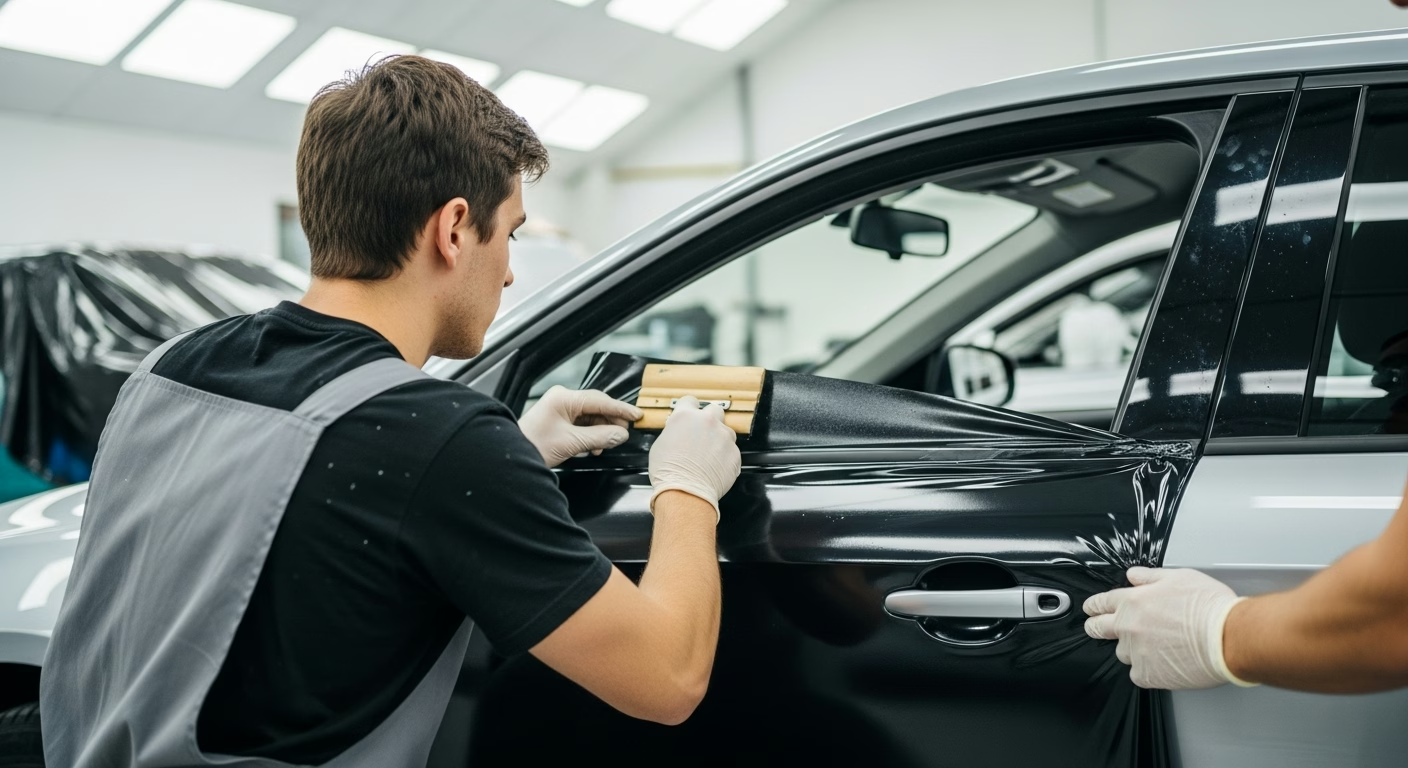
Learning to wrap vehicles has become a structured career path rather than a skill picked up informally at the back of a workshop. In the United Kingdom, a beginner can now choose between a short vehicle wrapping course lasting one to five days and a formal two-year apprenticeship whose occupational standard explicitly lists vehicle wraps among its installation techniques. The choice matters: the two routes differ in cost, depth and recognition on the job market.
The context is favourable to newcomers. The technique of covering bodywork with self-adhesive vinyl film spread from advertising liveries in the 1990s to fleet branding, colour change and paint protection, and workshops regularly report difficulties recruiting trained fitters. An installer who combines certified training with a portfolio of documented projects enters a market where demand comes from three directions at once: businesses branding their fleets, private owners personalising a car, and dealers preparing special editions.
This guide details what a vehicle wrapping course actually teaches, compares short classes with the apprenticeship route, reviews the credentials that carry weight, and maps the career path from first squeegee strokes to running an installation bay.
A serious programme is built around hands-on practice on real panels, not around slides. Whatever the format, the syllabus converges on the same core blocks that define the trade of the wrap installer.
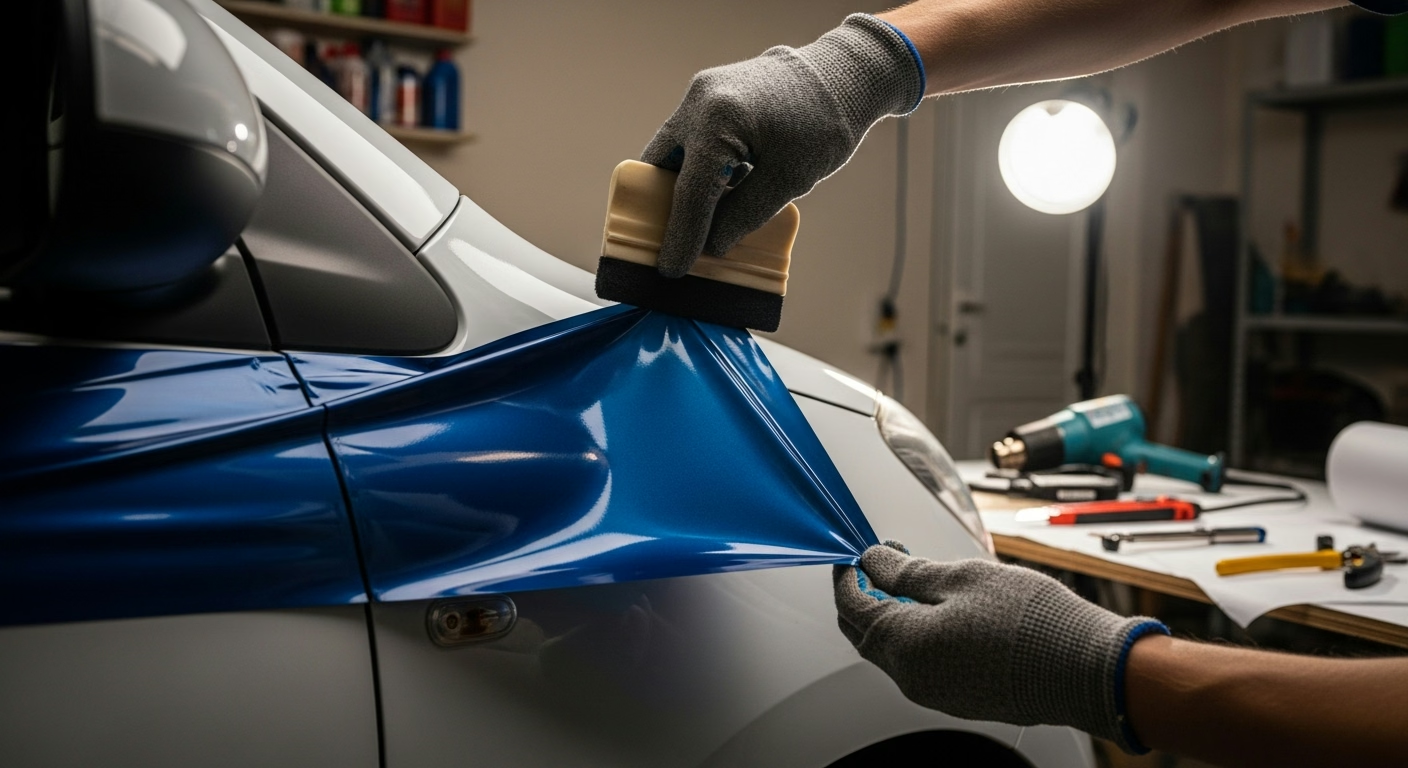
The first block is surface preparation: decontaminating bodywork, degreasing recesses, and diagnosing paint defects that would compromise adhesion. Trainees then move to film handling itself, which is where most of the practice hours go. Typical exercises include wrapping a flat door skin, a curved wing, a mirror shell and a bumper with deep recesses. Instructors teach heat management with the heat gun, tension control to avoid overstretching, post-heating to lock the film into complex curves, and clean cutting with knifeless tape. A good course also covers removal, since a large share of commercial work involves deposing an old livery before applying a new vehicle wrap.
The second block is quality control: spotting lifting edges, silvering, dirt inclusions and tension marks, and knowing which defects can be reworked and which require a fresh panel of film. This inspection discipline is what separates a hobbyist finish from work that survives a client walk-around.
Film selection is taught as a decision process rather than a catalogue tour. The trainee learns to distinguish monomeric, polymeric and cast vinyl, and to match each grade to the geometry and expected life of the job, a distinction detailed in the guide to cast and calendered wrap materials. Courses also introduce laminates, application fluids for lettering work, and the storage conditions that keep a roll usable.
Safety forms part of the same block. Professional programmes reference the workshop obligations that apply to any UK installation business, including the COSHH rules on hazardous substances covering solvents and adhesive removers, along with manual handling and safe use of heat tools.
The UK market offers two clearly different paths, and the right one depends on the candidate's starting point and timeline.
Private academies run vehicle wrap classes of one to five days, usually in small groups or one-to-one. A one-day introduction generally starts around 450 pounds, while multi-day programmes commonly sit between 800 and 1,500 pounds depending on duration and group size. In two to three days, a motivated beginner learns to wrap individual panels to a presentable standard; a full week adds bumpers, complete faces of a vehicle and dechroming work.
The honest limit of this format is speed and consistency. A course provides the correct gestures, but commercial productivity, wrapping a complete car in two to three days at sellable quality, only comes after weeks or months of supervised practice. Workshops know this, which is why job advertisements frequently ask for demonstrable experience on top of any certificate.
The structured alternative is the Signage Technician Level 3 apprenticeship standard, whose duties explicitly include self-adhesive vinyl application on vehicles, windows and substrates, and whose recognised job titles include transport and vehicle wrapper and vinyl applicator. The programme runs for around 24 months, combines paid employment with time at a training provider, and finishes with an independent end-point assessment.
Entry conditions are accessible: the National Careers Service profile for sign makers indicates that candidates usually need five GCSEs at grades 9 to 4, including English and maths. Candidates aged 16 or over can check eligibility on the official apprenticeship guidance, then apply through the government service, where signage vacancies appear regularly on the Find an apprenticeship portal. Employers can identify approved course deliverers through the official list of signage technician training providers. The funding band reaches 10,000 pounds, met through the apprenticeship levy system rather than by the apprentice, which makes this the most economical route into the trade for a school leaver.
No licence is legally required to wrap a vehicle in the UK. In practice, three types of credential structure the market. The first is the apprenticeship qualification described above, the only state-recognised standard covering vehicle wraps. The second is manufacturer accreditation: the principal film producers operate assessment schemes that test an installer on their materials, and fleet clients often require accredited fitters for warranty reasons. The third is the informal but decisive portfolio, a documented record of completed vehicles with close-up photographs of edges, recesses and seams.
Careers services across the UK now treat the role as a trade in its own right; Careers Wales publishes a dedicated vehicle wrapper profile describing entry routes and working conditions. For a candidate comparing options, the practical rule is simple: short courses open the door fastest, the apprenticeship provides the deepest foundation, and manufacturer assessments become relevant once an installer works on warranted commercial contracts.
Salary data gives a realistic picture of the early career. Aggregated figures place the average UK vehicle wrapper salary around 26,500 pounds a year, with entry-level positions near 25,000 pounds and experienced installers reaching about 35,000 pounds. Glassdoor reports a comparable national average of around 27,000 pounds. The related sign maker profile shows starter pay near 20,000 pounds rising to 28,000 pounds with experience, over a typical 42 to 44 hour week.
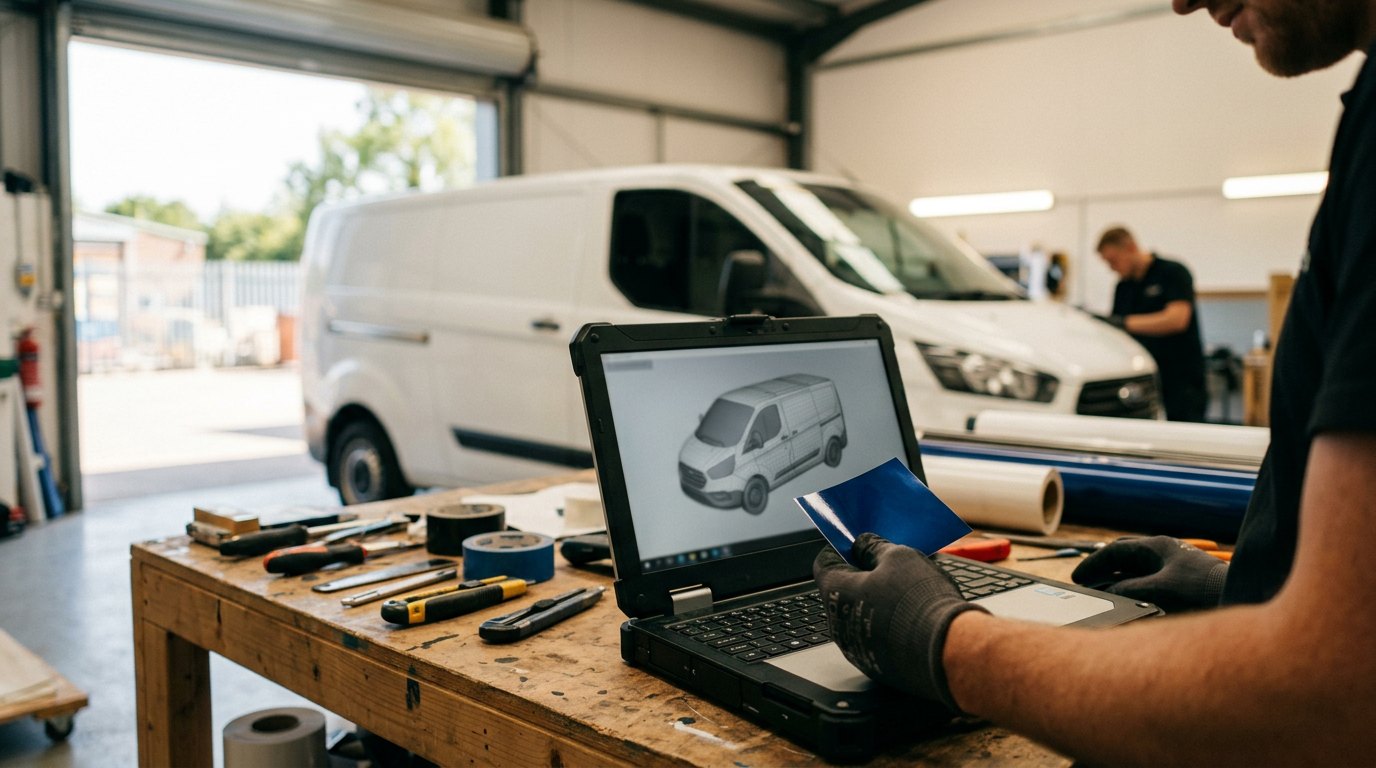
Demand is driven primarily by commercial work. Fleet operators renew liveries on cycles of three to seven years, and every renewal means removal and reinstallation across dozens of vehicles, the economics of which are detailed in the guide to van and fleet wrapping. Colour-change work for private clients and paint protection film complete the workload of a typical bay. An installer who also understands wrap design constraints becomes more valuable to a studio, since fewer files come back from the bay as unprintable or unfittable.
The classic progression starts as a junior fitter handling preparation, decals and vehicle lettering, moves to full panels, then to complete vehicles, and after two to four years reaches senior installer status with responsibility for quoting and quality sign-off. From there, paths diverge: workshop supervision, technical sales for a distributor, or independence.
Setting up independently is administratively light, since a fitter can register as a sole trader and start with a modest toolkit compared with a paint operation. The commercial challenge is steadier: a lone installer needs a pipeline of fleet and dealer work to keep a bay busy, which is why many experienced fitters join the installer networks of fleet personalisation platforms rather than prospecting alone. Understanding how professional wrap pricing is built helps a new independent quote sustainably instead of undercutting and burning out.
The subjects covered by a vehicle wrapping course connect directly with several resources published by Brands And Markets. The overview of fleet personalisation services shows the range of work a trained installer encounters on commercial contracts, from full wraps to lettering and accessories.
For a picture of how industrialised ordering works on the client side, the online configurator illustrates the type of structured brief, vehicle model, zones covered and finish, that installers increasingly receive from fleet platforms.
A vehicle wrapping course is the entry ticket to a trade with measurable demand, but the format should match the candidate's situation. A school leaver gains the most from the funded two-year apprenticeship and its state-recognised qualification; a career changer with savings and urgency gets to billable work faster through an intensive course followed by months of deliberate practice on personal projects.
In both cases, the market rewards the same combination: verified training, a photographed portfolio, and familiarity with the commercial realities of fleet work. The trained installer who masters removal as well as application, and who can hold quality across ten identical vans rather than one show car, is the profile that workshops and fleet personalisation platforms compete to hire.
The fundamentals take days; the trade takes months. Intensive courses of one to five days teach surface preparation, film handling and finishing on individual panels, and a five-day programme usually ends with a complete vehicle wrapped under supervision. Commercial competence, meaning a full car wrapped in two to three days at a quality a client will pay for, typically requires three to six months of regular practice after the course. The apprenticeship route spreads the same learning over roughly 24 months of paid employment, with the advantage that practice happens on real client vehicles under a senior fitter's eye rather than on scrap panels at home.
There is no legal licence requirement: anyone may offer vehicle wrapping services. The market, however, filters strongly on credentials. The Signage Technician Level 3 apprenticeship is the state-recognised standard whose scope includes vehicle wraps, and the main film manufacturers run accreditation schemes that fleet clients frequently require for warranty-backed installations. Job advertisements for installer positions commonly ask for around two years of demonstrable experience alongside any certificate. A candidate without formal credentials can still enter the trade through a portfolio of documented personal projects, but progression to warranted commercial work usually passes through at least one recognised assessment.
Salary aggregators place the average UK vehicle wrapper at roughly 26,500 pounds a year, or about 13.60 pounds an hour. Entry-level positions start near 25,000 pounds, and experienced installers reach around 35,000 pounds, particularly where the role includes quoting, quality control or supervision of junior fitters. The closely related sign maker profile published by the National Careers Service shows 20,000 pounds for starters rising to 28,000 pounds with experience, over a typical week of 42 to 44 hours. Independent installers with a steady fleet pipeline can exceed employed rates, but carry premises, insurance and material costs.
Private training prices scale with duration and group size. One-day introductory classes generally start around 450 pounds, two and three-day courses commonly sit between 800 and 1,200 pounds, and week-long one-to-one programmes reach 1,500 pounds or more. The apprenticeship route reverses the economics: the Signage Technician standard carries a funding band of up to 10,000 pounds met through the English apprenticeship system, so the apprentice pays no tuition and earns a wage throughout the 24 months. For a career changer, the realistic budget also includes a starter toolkit and practice film, typically a few hundred pounds beyond the course fee.
The trade offers durable demand and a clear ladder. Fleet operators renew liveries on multi-year cycles, personalisation demand keeps colour-change work flowing, and paint protection film adds a growing third revenue stream. Progression runs from junior fitter to senior installer within two to four years, then to supervision, technical sales or independence, and the tooling cost of an installation bay is modest compared with a spray booth. The constraints are physical: the work is standing, precise and paced by deadlines, over weeks of 42 to 44 hours. For a candidate who enjoys manual precision work, the balance of entry cost against earning potential compares well with neighbouring trades.
Prêt à transformer votre projet ? Discutons de vos besoins et de la manière dont nous pouvons collaborer.
Adresse : 28 rue Fresnel – F-78310 COIGNIERES
Téléphone : 01 85 40 01 75