June 18, 2026
White is the most versatile colour in the wrap market, but solid white and pearl white behave very differently. This guide compares their finishes, real durability, resistance to dirt and yellowing, the day-to-day care each needs and the UK rules on colour change.
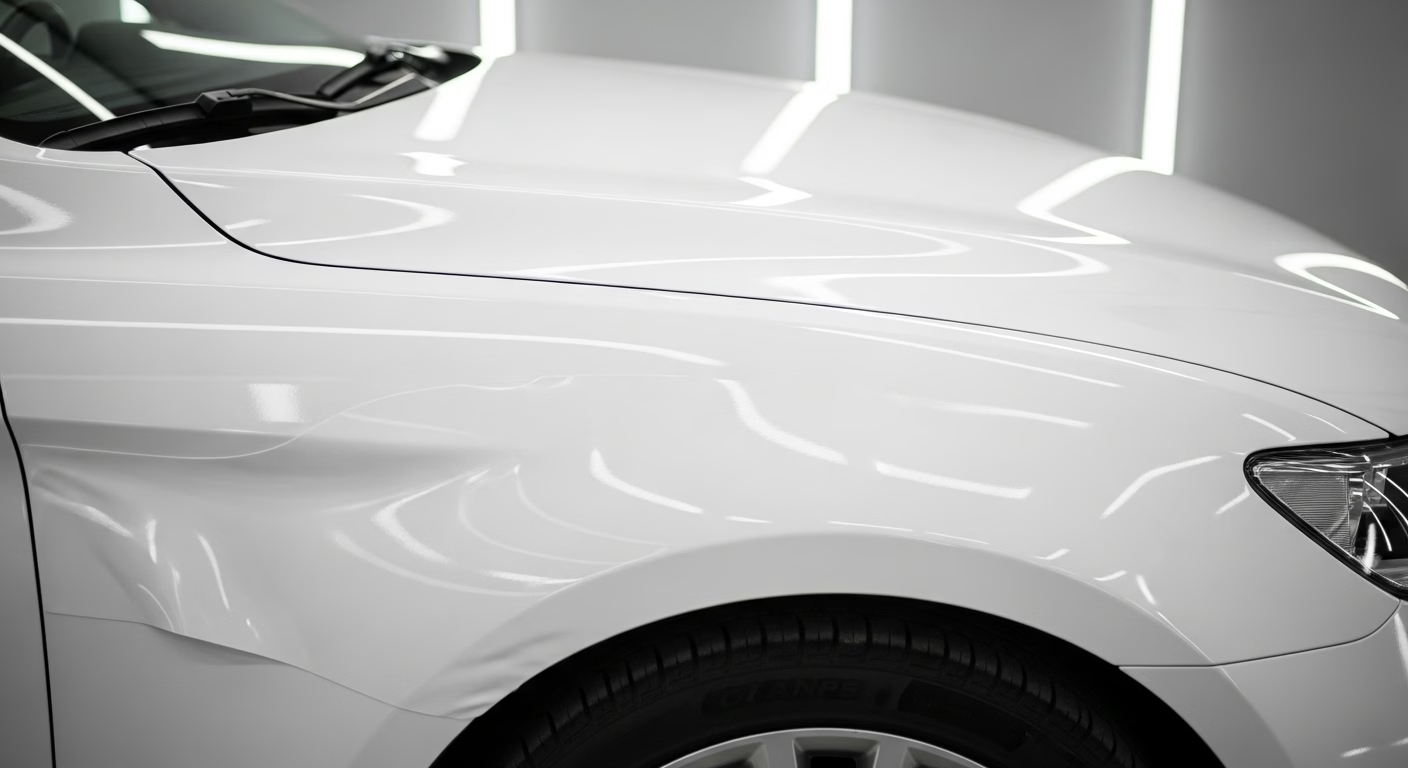
White is one of the most requested colours in the vehicle wrap market, and for good reason. It reads as clean and professional, it suits both private cars and commercial fleets, and it gives a neutral base that graphics and lettering sit on top of with high contrast. The choice is rarely as simple as a single shade, though, because the white vehicle wrap category covers everything from a flat solid white to a deep pearlescent finish that shifts in the light.
Each of those finishes behaves differently once the vehicle is back on the road. Durability, the way the surface handles dirt, the long-running question of yellowing, and the day-to-day care all change depending on whether the film is a classic white or a pearl white. The practice of covering a vehicle's paint with adhesive film, described in detail on the reference page for vinyl wrapping, has matured to the point where these finishes are reliable, but the differences between them matter at the specification stage.
This guide sets out how classic white and pearl white compare, what realistic service life looks like, how each finish responds to grime and ultraviolet light, and the administrative points that apply in the United Kingdom once the colour of a vehicle changes.
White occupies an unusual position in the colour range. It is the most common factory paint colour on many segments, which means a white wrap is often chosen to refresh a tired finish rather than to make a dramatic statement. For a business, a clean white base also acts as the canvas for a fleet identity, where the brand graphics carry the message and the body colour stays neutral. The basic principle of wrapping, and how it differs from a respray, is covered in the overview of what a vehicle wrap involves.
Because white reflects a large share of the light that hits it, it stays cooler in the sun than a dark colour and tends to mask minor surface imperfections in the bodywork beneath. The trade-off is visibility of dirt: a pale surface makes road film, brake dust and organic marks obvious far sooner than a dark wrap would. That single characteristic shapes most of the practical advice that follows.
The term white wrap hides at least two distinct families of film. Understanding the difference is the first step in setting realistic expectations for appearance, longevity and upkeep.
A classic white is a single, opaque pigment layer, available in gloss, satin or matte. It is the most straightforward white to manufacture, the most forgiving to fit, and generally the most affordable option in the white category. A gloss solid white gives a result close to a factory paint finish, which is why it is the default choice for fleets and for owners who simply want a crisp, uniform colour.
Because the colour comes from a stable pigment rather than from a light-bending structure, a solid white is also the most predictable over time. It resists fading better than most specialist finishes and, in a cast film grade, holds its appearance across the full service life. For buyers weighing materials, the distinction between cast and calendered films is set out in the guide to vinyl wrap materials.
A pearl white is built from layered pigments that scatter and reflect light, producing a soft, shifting depth rather than a flat colour. The optical effect relies on the same physics that gives mother-of-pearl its glow, a phenomenon described under iridescence and pearlescence. The result is more luxurious and more visually complex than a solid white, and it photographs particularly well.
That sophistication comes with practical consequences. Pearl films are more demanding to fit because the finish can reveal alignment differences between panels, and the layered pigment structure is more sensitive to prolonged ultraviolet exposure than a single solid pigment. In day-to-day terms a pearl white asks for slightly more attentive care and tends to record a shorter service life than an equivalent solid gloss white.
Service life depends on three things above all: the grade of the film, the amount of sun the vehicle sees, and how consistently the surface is cleaned. A cast film, calendered to a thin and stable gauge through the process explained under calendering, conforms tightly to contours and holds up far longer outdoors than a thicker, lower grade film intended for short-term graphics.
In broad terms, a solid gloss white in a professional cast grade can be expected to perform for five to seven years in daily use, while a pearl or satin white more often reaches four to six years before its appearance begins to soften. A vehicle kept under cover sees the longer end of those ranges, because ultraviolet light and heat are the main drivers of pigment fade and adhesive ageing. The same logic explains why a wrap protects the original paint underneath, a point also noted by the motoring body in its comparison of protective films for paintwork.
Cost tracks complexity. A pearl finish carries a premium over a solid white because of its layered pigments, which is worth factoring into any budget alongside the wider figures set out in the breakdown of vehicle wrap cost.
The most common worry about any white wrap is that it will discolour. In practice, modern cast films carry ultraviolet inhibitors that hold off yellowing for most of the service life. Discolouration becomes a real risk in two situations: when a low grade film is left permanently in strong sun, and when contaminants such as traffic film, fuel splashes, tree sap or iron particles are left to bond into the surface instead of being removed promptly.
Staining is a separate issue from fading. A gloss white sheds dirt comparatively easily because its smooth, sealed surface gives contaminants little to grip. A matte or satin white, by contrast, has a microscopically textured surface that can trap grime, which makes marks more visible and harder to lift. For owners who want the lowest maintenance burden in a pale colour, a gloss solid white is usually the most practical choice.
Maintenance is where a white finish earns its keep or loses its looks. The principles are simple and consistent across finishes, with a little extra attention for pearl and matte surfaces.
Followed consistently, this routine keeps a white wrap looking close to new for the bulk of its service life and limits the slow build-up of contaminants that leads to permanent marking.
A full white wrap changes the visible colour of the vehicle, which brings two obligations into play. The first concerns the registration record. Where a wrap changes the main colour recorded on the logbook, the change should be notified to the licensing authority, as set out in the guidance on how to change vehicle details on a V5C. The notification is made through section 7 of the certificate, and the official procedure is described under the steps to tell the DVLA of a change. The legal basis sits within the Road Vehicles (Registration and Licensing) Regulations 2002.
The second obligation concerns insurance. A wrap is treated as a modification, and motoring guidance is clear that any change from factory specification should be declared, as explained in the advice on car modifications and insurance. Failing to declare a colour change can put a claim at risk, a point reinforced in the guidance on what can invalidate a policy. Broader motoring law for drivers is summarised in the legal advice section for motorists.
One practical detail often overlooked is the number plate. A wrap must not cover or obscure the registration plate, which has to remain compliant under the rules on displaying number plates; an obscured plate can lead to a fine and an MOT failure. For a partial graphic or fleet livery that keeps the registered colour, none of the colour-change steps apply, only the requirement to keep plates and lights clear.
The choices set out above connect with several services offered by Brands And Markets. For a fleet that needs a neutral white base carrying a consistent brand identity, the dedicated page on vehicle lettering and decals details how graphics are applied over a wrapped surface.
For a manufacturer working on a special edition or a coordinated launch colour, the approach to range animation and special editions covers volume personalisation. For a structured project across several vehicles, the online configurator gives a quick way to scope a finish and obtain an indicative quote.
A white vehicle wrap is a versatile choice, but the right answer depends on the finish. A solid gloss white offers the longest service life, the easiest upkeep and the best resistance to dirt, which makes it the practical default for daily drivers and fleets alike. A pearl white delivers a richer, more luxurious appearance, at the cost of slightly more careful maintenance and a marginally shorter lifespan.
Whatever the finish, durability comes down to film grade, sun exposure and regular cleaning, while the administrative steps around colour change and insurance are straightforward once they are accounted for. Buyers weighing a finish, a budget and a fleet rollout can use the online configurator to compare options and frame a project before committing.
A professionally fitted white wrap usually lasts between five and seven years on a vehicle in daily use. A solid gloss white in a cast film grade tends to sit at the upper end of that range, because its single, stable pigment resists fading well. A pearl or satin white more often reaches four to six years, since its layered pigment structure is more sensitive to sustained sunlight. The biggest variables are the grade of the film, how much ultraviolet exposure the vehicle sees, and how consistently the surface is cleaned. A vehicle kept under cover when not in use reliably reaches the longer end of these ranges.
Modern cast films are manufactured with ultraviolet stabilisers that hold off yellowing for most of their service life, so a quality white wrap stays close to its original shade for years. Discolouration tends to appear in two situations: when a lower grade film intended for short-term use is left permanently in strong sun, and when contaminants such as traffic film, sap or iron particles are allowed to bond into the surface instead of being washed off. Prompt removal of aggressive marks and a regular gentle wash are the most effective ways to keep a white finish from turning.
A white surface makes road grime, brake dust and organic staining visible far sooner than a dark colour, so it does ask for more frequent washing. The finish also matters: a gloss white has a smooth, sealed surface that releases dirt easily, while a matte or satin white has a textured surface that can trap contaminants and make marks more obvious. For the lowest maintenance burden in a pale colour, a gloss solid white is generally the most practical choice. A consistent wash routine with mild shampoo and a soft mitt keeps any white finish looking crisp.
A classic solid white is the more durable of the two. Its colour comes from a single stable pigment, which resists fading and holds its appearance across the full service life, and its smooth surface sheds dirt well. A pearl white relies on layered pigments that bend and scatter light, which produces a richer look but makes the film more sensitive to prolonged ultraviolet exposure and a little more demanding to maintain. For maximum longevity and the simplest upkeep, a solid gloss white is the stronger option; for visual depth and a premium appearance, a pearl white justifies the extra care it requires.
Prêt à transformer votre projet ? Discutons de vos besoins et de la manière dont nous pouvons collaborer.
Adresse : 28 rue Fresnel – F-78310 COIGNIERES
Téléphone : 01 85 40 01 75