August 5, 2026
The carbon look has moved from race paddocks to company car parks. This guide separates real carbon fibre parts from carbon-effect vinyl films, decodes the 2D, 3D and 4D labels, and details the best zones to wrap, realistic prices and UK legal points.
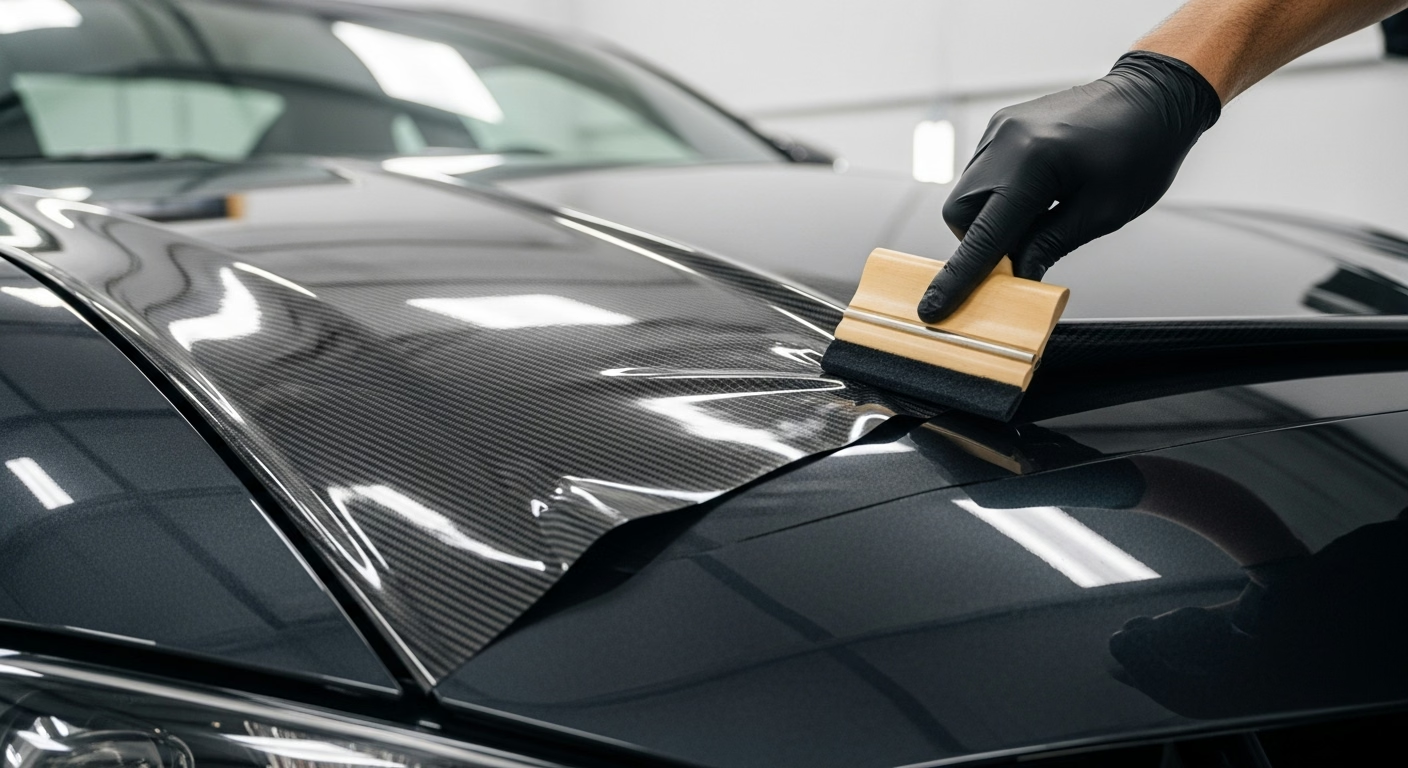
A carbon fibre vehicle wrap gives a car or van the woven texture of a motorsport composite without a single genuine carbon part. The film itself is an embossed vinyl, applied over the paint like any other wrap, and it costs a small fraction of the material it imitates. That gap between what the finish suggests and what it actually is explains most of the questions buyers ask before committing.
The distinction matters because real carbon fibre and carbon-effect film share nothing beyond appearance. One is a structural composite engineered to save weight on aircraft and competition cars; the other is a decorative layer a few tenths of a millimetre thick. The market has also multiplied labels, from 2D to 6D, which describe surface finishes rather than quality grades, and which confuse more than they inform.
From the difference between genuine composite and embossed film to the meaning of those generation labels, the zones where the finish works best, realistic budgets, expected lifespan and the points UK law raises, the subject rewards a closer look before any panel is wrapped.
Genuine carbon parts are made from carbon fibre reinforced polymer, a composite in which woven carbon filaments are set in a resin matrix. The fibres themselves measure only a few micrometres in diameter, and the finished material combines very high stiffness with low weight, which is why it dominates aerospace and motorsport. Producing a body panel this way involves moulds, controlled curing and hand finishing, and the price reflects that process.
A carbon-effect wrap film is a different object entirely. It is a sheet of plasticised polyvinyl chloride, embossed or printed with the characteristic twill weave pattern, backed with a pressure-sensitive adhesive. It adds no stiffness, saves no weight and has no structural role. What it offers is the look: applied cleanly on a bonnet or roof, a good film reads as carbon from a normal viewing distance, and it protects the paint underneath in the same way as any quality wrap.
The choice between the two is therefore not a comparison of grades but a choice of purpose. A project that needs weight saving or rigidity needs real composite parts. A project that needs the visual signature of carbon, at a controlled budget and with a reversible result, points to the film. Understanding the difference between cast and calendered wrap materials matters more to the final result than any marketing label on the box.
The generation labels attached to carbon films describe how the weave is rendered, not how well the film is made. The trade uses them loosely, and two films with the same label can behave very differently on the vehicle.
None of these labels is a formal standard. The construction of the film, cast or calendered, its thickness and the quality of its adhesive determine how it stretches, how it ages and how it behaves on curves. A well-made 3D film from a reputable range will outlive a cheap 6D film in every real-world condition observed in workshops.
The carbon finish is at its strongest as an accent. On performance vehicles, real composite appears on specific parts: bonnet, roof, mirror housings, spoilers, diffusers and interior trims. A wrap that follows the same logic looks intentional, because it echoes a visual code the eye already knows.
The most requested zones follow directly from that code. A carbon roof over a gloss or matte black wrap body is a proven combination, as are carbon mirror caps and a carbon bonnet on a sports saloon. Interior trim pieces, door sills and pillar covers take the same films in smaller formats. For a company fleet, discreet carbon accents can sharpen a sober livery without turning the vehicle into a rolling billboard, a use closer to branding than to the classic wrap advertising model.
A full carbon wrap over the entire body is technically feasible and visually radical. It suits show vehicles and bold personal projects more than daily drivers, and it multiplies the surface on which the textured film must be aligned, stretched and maintained. Buyers exploring the option usually compare it against the wider palette of wrap colours and finishes before committing to texture on every panel.
Textured carbon films are among the more demanding materials a fitter handles, for reasons that follow from their construction. The embossed surface makes the film slightly thicker and stiffer than a standard colour film, so it conforms less willingly to deep curves and recesses. Heat helps, but overstretching flattens or distorts the weave, and the defect stays visible because the pattern acts like a grid that reveals every deformation.
Pattern alignment adds a constraint that plain films never impose. The twill weave has a direction, and adjacent panels wrapped with mismatched weave orientation look wrong even to an untrained eye. A careful installer plans the direction of the roll across bonnet, wings and bumpers before cutting anything. In this respect the finish sits close to a chrome wrap: the material forgives little, and the difference between an amateur and a professional result is obvious at two metres.
Surface preparation follows the same rules as any wrap, with the caveat that matte textured films can highlight underlying defects at raking light angles. Deep scratches, stone chips and corrosion must be addressed before application, because the film will not hide them.
Carbon-effect films sit in the premium segment of the wrap market, priced above standard gloss colours and close to other textured or special-effect ranges. For partial jobs, workshops commonly quote a few hundred pounds for a bonnet or a roof, with mirror caps and small trims below that. A full carbon wrap on a passenger car is generally positioned above a comparable standard colour change, reflecting both film cost and the extra fitting time. Detailed price ranges by vehicle type are covered in the guide to what a vehicle wrap costs.
Longevity depends on the construction of the film more than on the carbon pattern itself. Quality cast films are commonly given five to seven years in daily outdoor use, while calendered entry-level products are quoted nearer three to five. Prolonged exposure to ultraviolet radiation remains the main ageing factor, fading pigments and drying the film, so garaged vehicles keep their finish visibly longer. The general factors are the same as for any film, detailed in the article on how long a vehicle wrap lasts.
Care follows the rules of textured finishes: hand washing with a pH-neutral product, no automatic brush washes, and prompt removal of bird droppings and fuel spills. The embossed weave traps dirt more readily than a smooth gloss film, so matte and 3D textures reward slightly more frequent washing. Demand for these finishes is not marginal: market research such as the Grand View Research analysis of the automotive wrap film market tracks sustained double-digit growth for wrap films as a category.
A carbon wrap that changes the dominant colour of the vehicle triggers the same obligation as any colour-change wrap: the DVLA must be informed so the registration certificate reflects the new colour. The procedure is described on the official page for changing vehicle details on the registration certificate, including how to tell the DVLA by post with the V5C. Accent zones such as a roof or mirror caps do not normally change the recorded colour, but a full wrap does.
The vehicle must also remain compliant with the Road Vehicles (Construction and Use) Regulations 1986: the film must not cover lights, reflectors or number plates, and nothing about the finish may endanger other road users. The wrap itself is not an MOT test item, but the annual test still applies and the wrap must not mask anything the test checks.
Insurance is the point most often overlooked. UK insurers treat a wrap as a cosmetic modification, and guidance from motoring organisations such as the AA's advice on car modifications is consistent: declare the change, because an undeclared modification can compromise a claim. General legal guidance for drivers is also maintained by the RAC's motoring advice pages. Declaring a wrap usually costs little or nothing; not declaring it is the expensive option.
The carbon finish is one option within a broader personalisation toolbox that Brands And Markets covers for business fleets and professionals, from full covering to vehicle lettering and decals. The services overview details how each technique fits a fleet project.
For a structured project, a run through the online configurator gives a quick visual simulation and a first budget frame, including textured finishes such as carbon on accent zones.
A carbon fibre vehicle wrap delivers the look of a motorsport composite at a fraction of its cost, provided the buyer understands what the film is and is not. It is a decorative vinyl, at its best on the accent zones where real carbon naturally belongs, and its quality depends on the construction of the film rather than on a 3D, 4D or 5D label.
The sensible route is the same as for any demanding finish: compare film ranges on construction and warranty rather than marketing names, entrust the installation to a fitter used to textured materials, and settle the administrative points, DVLA and insurer, before the vehicle returns to the road. Approached this way, the finish ages well and removes cleanly, leaving the original paint intact.
Longevity depends on film construction and exposure rather than on the carbon pattern. A quality cast carbon-effect film is commonly given five to seven years in daily outdoor use, while calendered entry-level products are usually quoted at three to five years. Horizontal panels in direct sun, bonnet and roof precisely, age fastest because ultraviolet exposure fades pigments and dries the film. A vehicle parked under cover keeps its finish visibly longer, and careful hand washing with pH-neutral products extends the useful life. When the film reaches the end of its life, removal by a professional leaves the original paint intact if the wrap was applied and maintained correctly.
The labels describe how the weave is rendered, not how well the film is made. A 3D film is embossed with a tactile matte texture, matching the raw look of unlacquered composite. A 4D film carries a finer weave under a semi-gloss surface, so it looks deeper while feeling smoother. 5D and 6D films place the pattern under a high-gloss clear layer for a photographic depth effect, with a surface that feels like glass. None of these terms is a formal standard, and quality varies widely within each label. The construction of the film, cast or calendered, its thickness and its adhesive matter far more to durability and fitting behaviour than the number on the packaging.
Yes, by a wide margin. A genuine composite panel involves moulds, resin curing and hand finishing, so a real carbon bonnet for a passenger car typically costs several times the price of wrapping the same panel in carbon-effect film. The film also spares the owner the fitting, painting and certification questions that replacement body parts can raise. The trade-off is functional: the wrap brings none of the weight saving or stiffness of the composite, only its appearance. For a project driven by looks and budget, the film is the rational choice; for a project driven by performance, only the real material delivers.
Partial wrapping is the most common use of the carbon finish. Bonnet, roof, mirror housings, spoiler, diffuser and interior trims are the classic zones because they correspond to the parts made from real composite on performance vehicles, so the result reads as intentional rather than decorative. A partial job also keeps the budget contained, commonly a few hundred pounds per large panel, and simplifies future maintenance since a damaged section can be redone without touching the rest of the vehicle. Fitters generally recommend aligning the weave direction across neighbouring wrapped parts, which is easier to plan on a limited set of panels.
Two declarations can apply. If the wrap changes the dominant colour of the vehicle, the DVLA must be informed so the V5C registration certificate records the new colour; accent zones alone do not normally trigger this. Separately, insurers treat any wrap as a cosmetic modification, and standard guidance from motoring organisations is to declare it whatever the surface covered, because an undeclared modification can weaken a claim. The wrap must also leave the vehicle compliant with construction and use rules: lights, reflectors and plates stay uncovered and fully visible. Declaring a wrap is usually free or inexpensive, which makes it a simple precaution.
Prêt à transformer votre projet ? Discutons de vos besoins et de la manière dont nous pouvons collaborer.
Adresse : 28 rue Fresnel – F-78310 COIGNIERES
Téléphone : 01 85 40 01 75