July 8, 2026
A vehicle wrap lasts three, five or seven years depending on film family, sun exposure, fitting quality and care. This guide explains what each range corresponds to, how UV ages vinyl, which habits extend a wrap's life and how a fleet plans renewal.
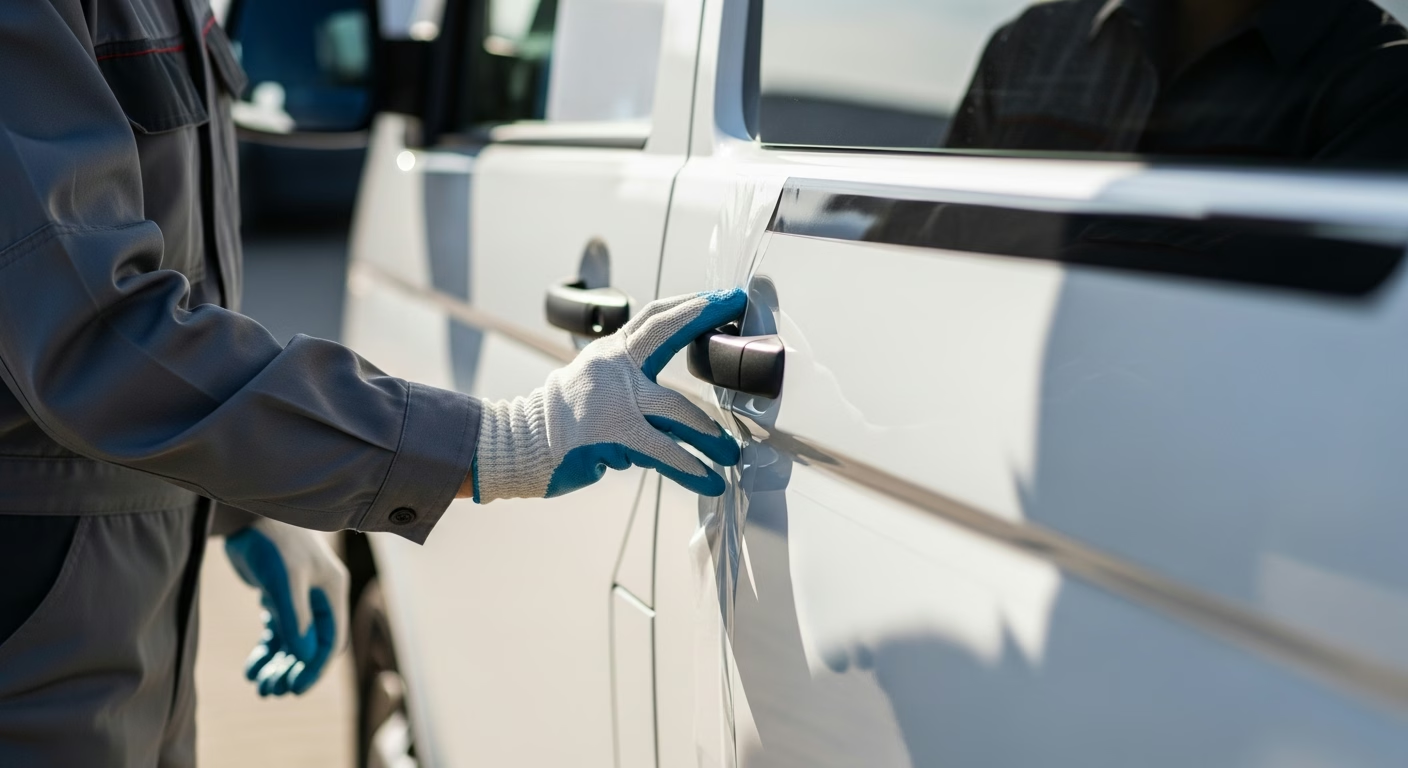
Alt text: fitter inspecting the vinyl wrapped side panel of a commercial vehicle parked outdoors in bright sunlight
Anyone pricing a wrap for a car, a van or a whole fleet ends up asking the same question: how long will the film actually last? The honest answer is a range, not a number. Depending on the film family, the finish, the climate and the washing routine, a vehicle wrap keeps its appearance for anywhere between three and seven years, sometimes more, sometimes less.
That range is not marketing vagueness. It reflects real physical variables: the way the vinyl was manufactured, the dose of ultraviolet light the panels receive, the quality of the installation and the care the vehicle gets in service. Each of those variables can add or remove years.
This article breaks the question down for a decision maker: what the three, five and seven year figures actually correspond to, which factors shorten or extend the life of a wrap, how to recognise the end of a film's service life, and how a fleet manager can plan renewal cycles instead of discovering faded vans at the worst moment.
The figures quoted by the industry follow the construction of the film. Entry-level calendered vinyl applied to flat panels is generally given one to three years outdoors. Mid-range polymeric calendered films reach three to five years. Premium cast films, the reference for full wraps, are commonly rated five to seven years in normal European service, with some products warrantied beyond that on vertical surfaces.
The distinction between vertical and horizontal surfaces matters more than most buyers expect. Manufacturer warranties routinely give a bonnet or a roof one to three years less than a door panel, because horizontal surfaces face the sky and collect the full daily dose of sun, heat and standing water. A wrap does not age as one unit: it ages panel by panel.
A useful mental model for a business: three years is what a budget film delivers, five years is a realistic working life for a quality wrap in real conditions, and seven years is achievable with cast film, moderate exposure and disciplined care. An earlier article explains in detail what a vehicle wrap is for a business and how the layers of film, adhesive and laminate work together.
Wrap films are made of plasticised polyvinyl chloride, but not all PVC films are born equal. Cast films are poured as a liquid onto a casting sheet and cured with almost no internal tension, which makes them thin, dimensionally stable and able to hold a stretch around curves for years. Calendered films are rolled out between heated cylinders, a process described by the British Plastics Federation, which leaves residual stress in the material: with time and heat, the film wants to shrink back.
That manufacturing difference translates directly into years. On a full wrap with recesses and rivets, a calendered film lifts and opens seams long before a cast film shows fatigue. On a perfectly flat panel, the gap narrows, which is why partial graphics and short campaigns can legitimately use cheaper film. The comparison is developed in the guide to vinyl vehicle wrap materials.
The laminate layer counts as much as the base film. A quality clear laminate carries most of the UV filtration and abrasion resistance; an unlaminated printed wrap can lose its colours in a single hard summer. When a quote seems surprisingly cheap, the missing laminate is often where the years went.
Ultraviolet light is the main natural enemy of any wrap. UV radiation triggers photo-oxidation of polymers: the molecular chains of the PVC break down, the surface chalks, colours shift and the film loses flexibility. In parallel, the plasticisers that keep the vinyl supple slowly migrate out of the material, which is why an old film cracks instead of stretching.
The dose of UV a vehicle receives varies enormously with geography and season. The UV index published by the Met Office shows how radiation peaks in the summer months, and the same service explains that UV levels depend on the height of the sun, cloud cover and atmospheric conditions. A van working in southern Spain simply consumes its wrap faster than the same van in Manchester.
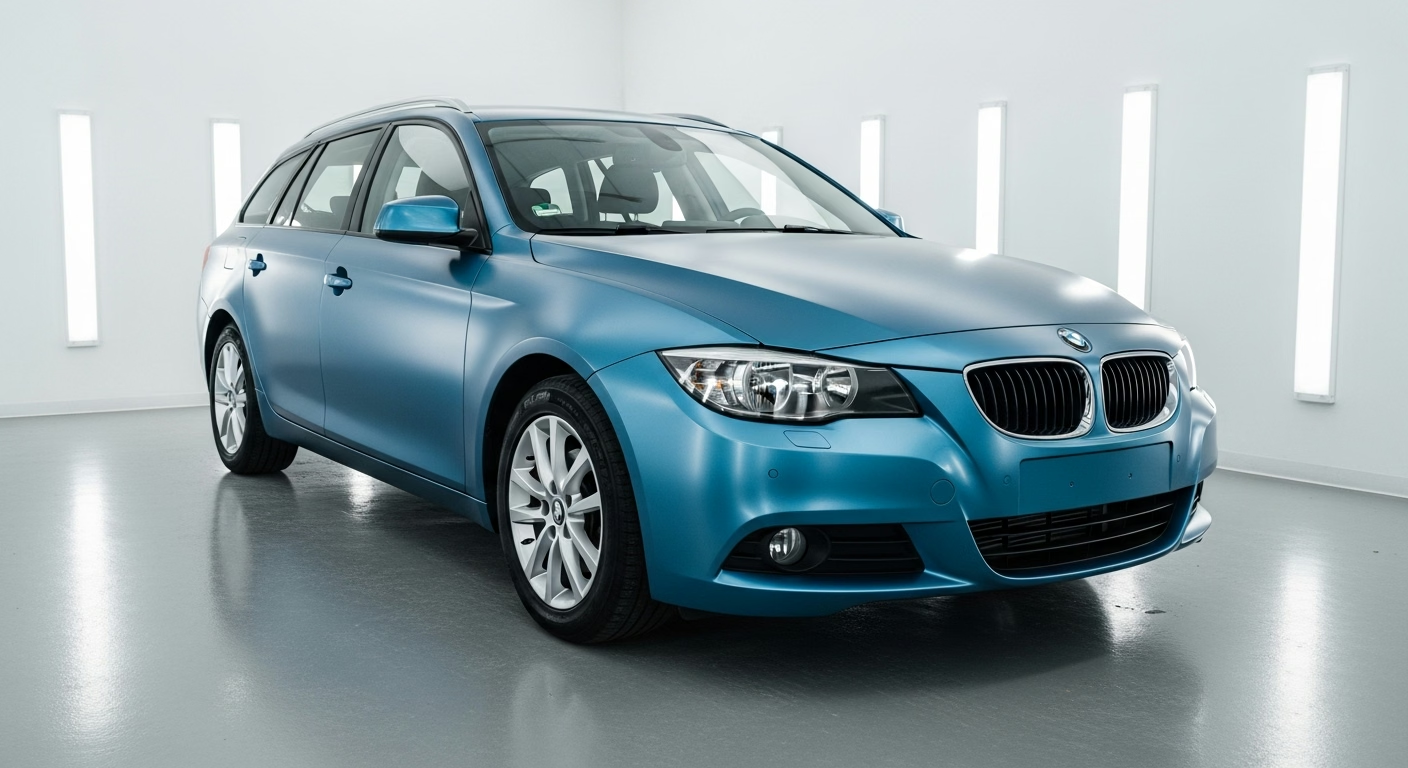
Colour choice interacts with exposure. Dark and saturated colours absorb more energy and show fading sooner; light colours hide UV wear longer. The article on vehicle wrap colours covers how pigments behave over time, and the guide to the matte black vehicle wrap details why delicate finishes demand stricter care to reach their rated life.
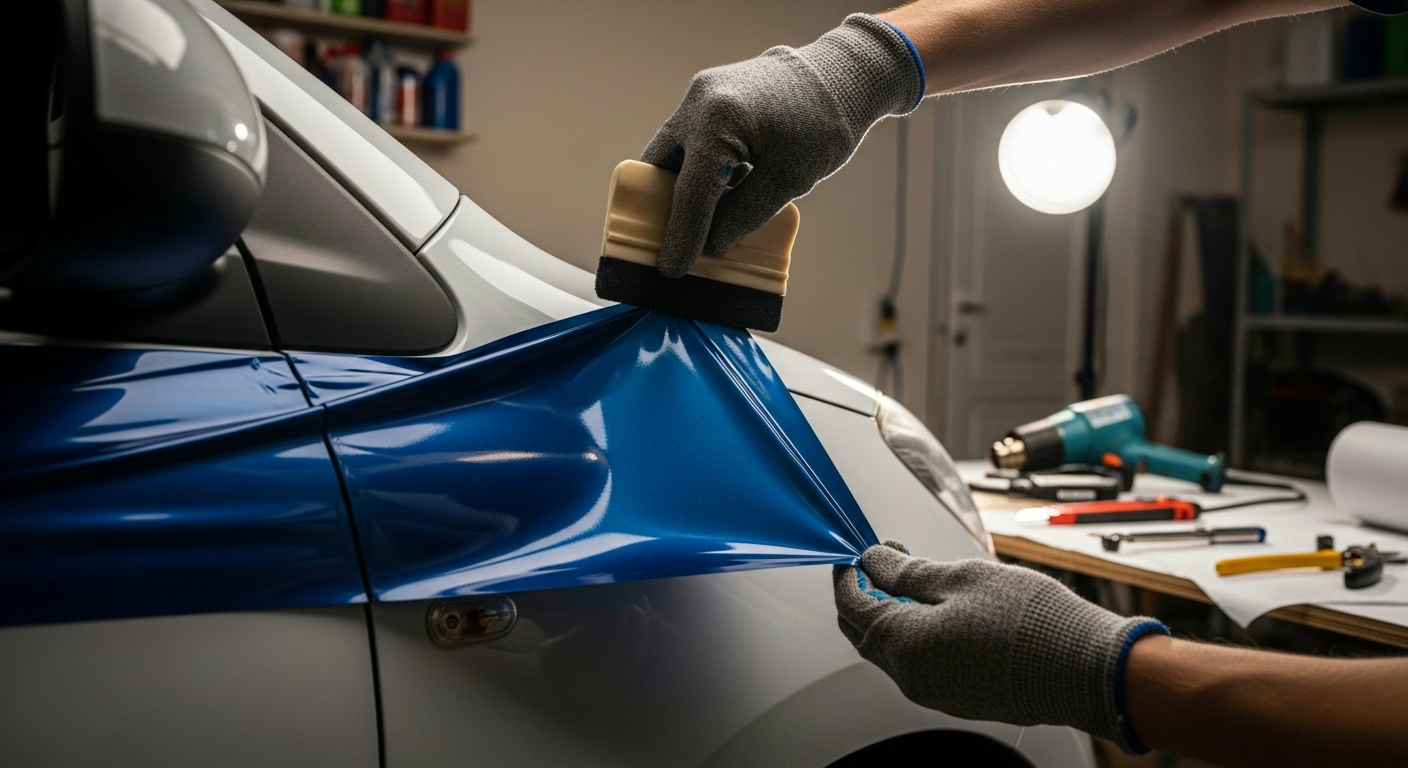
Two identical rolls of film can produce a seven year wrap or a two year wrap depending on who installs them. Correct surface preparation, controlled stretch and proper post-heating of tensioned zones decide whether the film stays anchored. Overstretched vinyl is thinner, poorer in plasticiser per surface unit and pulls permanently at edges and recesses; the failure shows up months later as lifting corners and greying stress lines.
Preparation faults are just as costly. Wax residue, silicone dressing or a panel washed an hour before fitting all weaken the adhesive bond from day one. A professional workflow includes decontamination, controlled drying and edge sealing where panels trap water. That is labour, and it is a large part of what separates a serious quote from a cheap one, as explained in the breakdown of vehicle wrap cost.
After film and fitting, maintenance is the variable the operator controls. The reference routine is simple: regular hand washing with a mild detergent, soft cloths or mitts, rinsing before wiping to avoid grinding dust into the surface, and prompt removal of fuel spills, bird droppings and tree sap, which etch the film chemically if left in the sun.
Practices to avoid are equally clear. Rotating brush washes dull the finish and work edges loose pass after pass. High pressure lances aimed at seams inject water under the film. Abrasive polishes and solvent cleaners strip the protective surface of the vinyl. None of these destroy a wrap in one incident, but each repetition quietly removes months of service life.
Parking is part of care. A vehicle kept under a roof, a carport or even consistent shade overnight ages visibly slower than one that lives outdoors around the clock. For fleets without covered parking, rotating vehicles between routes with different exposure evens out wear across the fleet.
A wrap announces its end visibly. Colour fade compared with sheltered zones, a chalky bloom that no cleaning removes, fine cracking on the bonnet and roof, and edges lifting around handles and mirrors are all consequences of the same underlying polymer degradation. At that point the film no longer serves the brand it carries, and every extra season makes removal slower and riskier as the adhesive hardens.
Timely removal has an administrative side in the United Kingdom. When a wrap changed the dominant colour of the vehicle, the change was recorded on the V5C registration certificate, and returning to the original colour or fitting a new dominant colour must be reported in the same way. Throughout the life of the wrap, the film must never encroach on lighting, reflectors or glazing covered by the Road Vehicles (Construction and Use) Regulations, and number plates must remain fully legible.
For a fleet manager, the lifespan question becomes a scheduling question. Passenger cars and light commercial vehicles on European roads are on average more than twelve years old according to the ACEA report on vehicles in use, which means a vehicle will typically outlive at least one wrap, often two. Building a wrap renewal line into the fleet budget, aligned with lease ends or brand refreshes, avoids both faded liveries and wasted film.
Renewal is also an opportunity. A fleet that replans its graphics every five years can simplify artwork, switch from full wraps to partial branding where full coverage added no value, or do the reverse on customer-facing vehicles. The practical trade-offs for working vehicles are covered in the guide to van vehicle wraps.
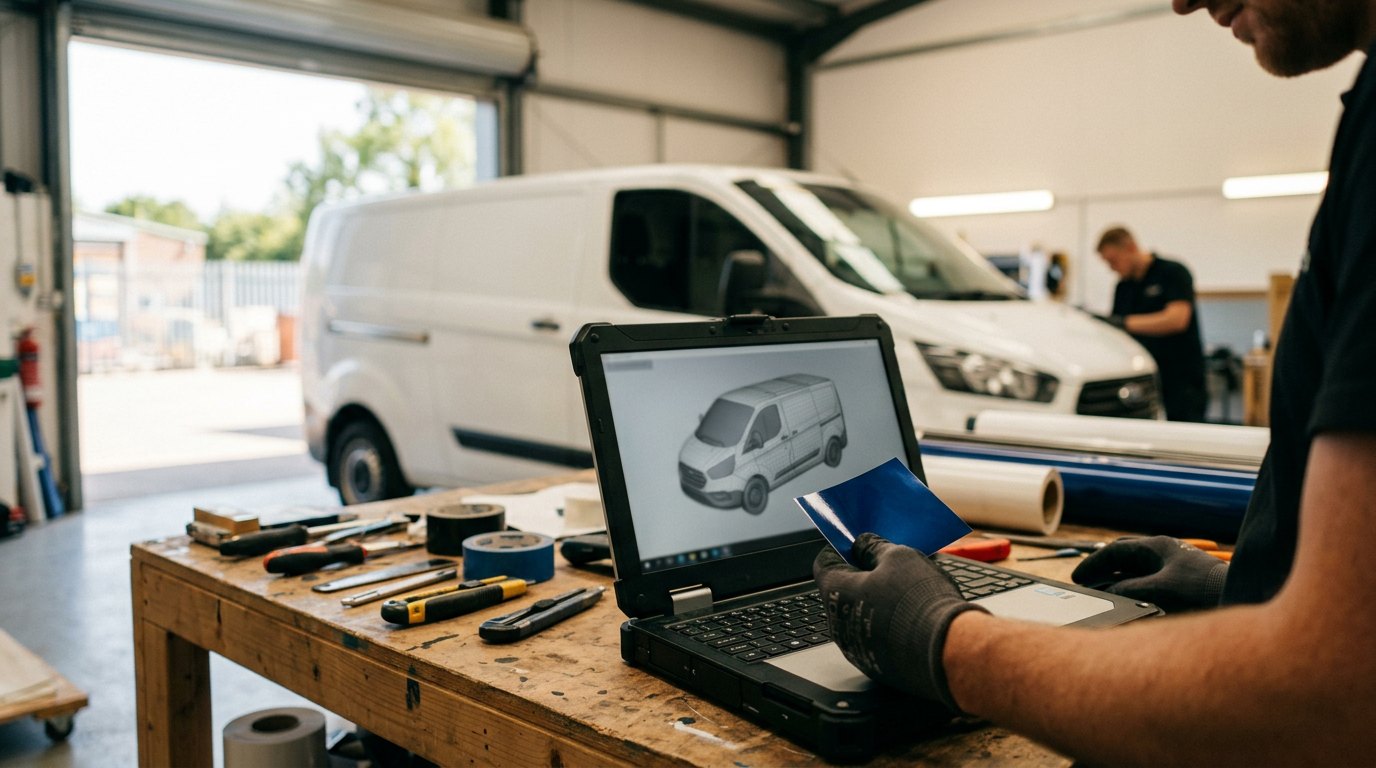
Brands And Markets accompanies businesses across the whole life cycle of a wrapped fleet, from material choice to renewal planning. For a lighter and longer-lasting alternative on some vehicles, the vehicle lettering and decals service applies durable cut graphics without covering the whole body. To compare finishes, films and coverage levels on a real vehicle and obtain an automated quote, the online configurator simulates the result before any commitment, and the overview of the available services shows how wrapping, lettering and accessories combine on a fleet.
A vehicle wrap lasts three, five or seven years depending on choices made before, during and after installation. The film family sets the ceiling, sun exposure sets the clock, the fitter decides whether the theoretical lifespan survives contact with reality, and the washing routine decides how much of it the operator keeps.
For a business, the practical conclusion is to treat lifespan as a specification, not a surprise: state the expected service life in the brief, choose the film accordingly, put the washing rules in writing and book the removal date in the fleet calendar. Handled that way, a wrap delivers its full value for its full life, and its replacement becomes a planned branding decision rather than an emergency.
A quality film removed within its service life normally protects the paint rather than harming it. The vinyl acts as a sacrificial layer against stone chips, light scratches and sun fade, and factory paint in good condition usually emerges brighter than the exposed panels around it. Problems appear when a wrap stays on far beyond its rated lifespan: the adhesive hardens, the film becomes brittle and removal can pull weak or repainted finishes. The condition of the paint before fitting matters as much as the film itself, which is why a professional fitter inspects the bodywork and flags fragile areas before any installation.
Brushless or touchless automatic washes are generally tolerated by wrap films, but rotating brush systems shorten the life of a wrap by dulling the surface and lifting edges over repeated passes. Hand washing with a mild, non-abrasive detergent remains the reference method for a wrapped vehicle. Pressure washers can be used with care: a wide fan pattern, moderate pressure, a distance of around fifty centimetres and never aimed directly at seams or edges. For a fleet, a written washing procedure shared with drivers and the washing contractor protects the investment at almost no cost.
Permanent outdoor parking is the single biggest reducer of wrap lifespan. A cast film rated for five to seven years can lose two years or more of service life when the vehicle sits in direct sun every day, and horizontal panels such as the bonnet and roof age fastest. In practice, a working vehicle parked on the street tends to show visible ageing from year three or four with quality film, earlier with an entry-level product. Covered or shaded parking overnight, even partial, measurably slows fading and keeps the finish consistent across panels.
The reliable signals are visual: noticeable colour fade compared to sheltered areas, a chalky or matte bloom on a gloss film, fine cracking on horizontal surfaces and edges that start to lift around handles and seams. At that stage the film has stopped representing the brand properly and removal becomes harder every season, because ageing adhesive bonds more aggressively to the paint. The practical rule is to plan removal or replacement at the end of the rated range rather than waiting for failure. In the United Kingdom, a change of the dominant colour also has to be recorded on the V5C registration certificate.
Commonly quoted service ranges place gloss films at three to seven years, satin at three to five years and textured or speciality finishes such as chrome effects at roughly one to three years. The polymer base is often similar; the difference lies in how visibly each finish shows wear. A matte or satin surface cannot be polished, so scuffs and glossy patches from rubbing are permanent, while speciality metallised layers are thinner and more sensitive to UV and washing. A business choosing a finish for a long service life usually favours gloss or satin from a cast film range.
Prêt à transformer votre projet ? Discutons de vos besoins et de la manière dont nous pouvons collaborer.
Adresse : 28 rue Fresnel – F-78310 COIGNIERES
Téléphone : 01 85 40 01 75