July 22, 2026
A custom vehicle wrap turns a working van or car into branded media designed for one business. This guide follows the whole workflow: the brief, design and proofing, print production, installation day, the UK rules to check and how a fleet rollout is phased.
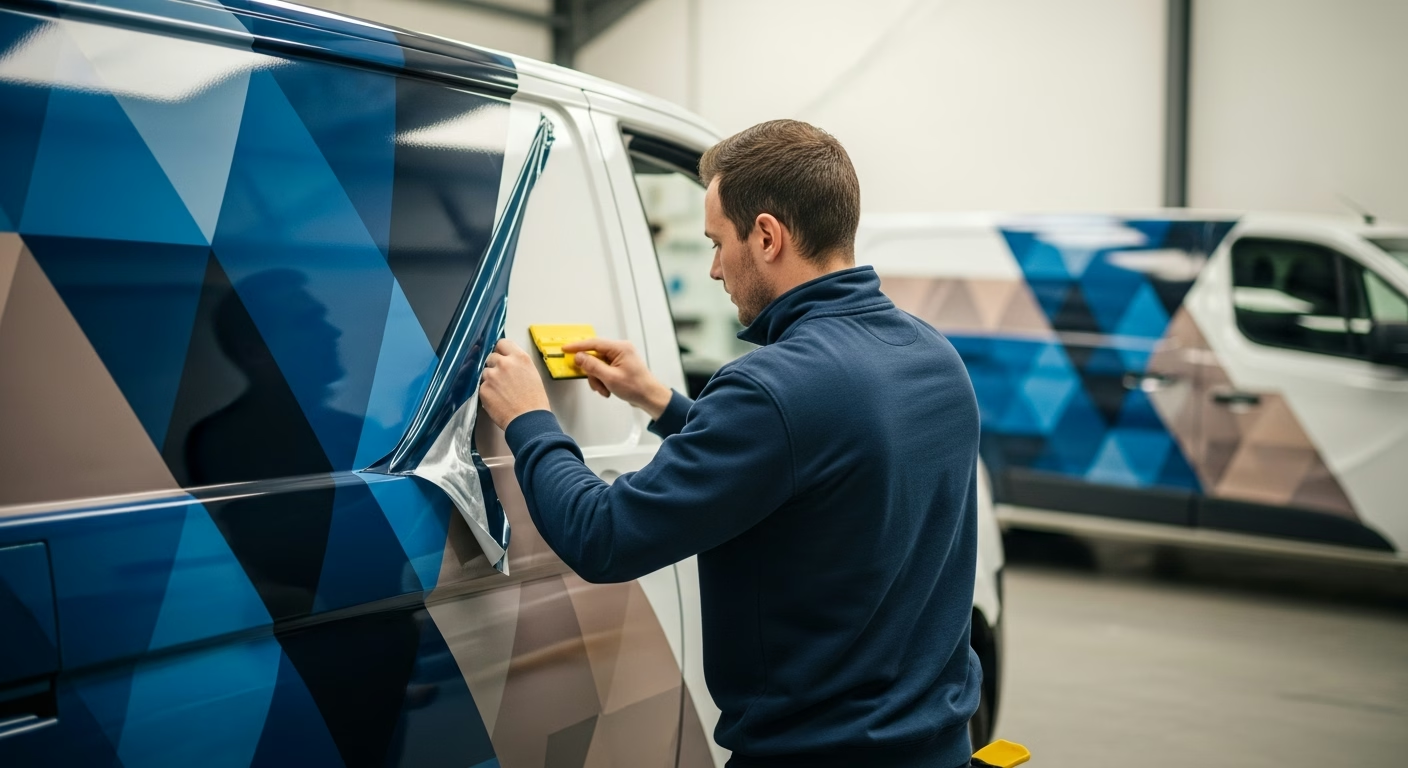
A custom vehicle wrap is a one-off piece of design produced for a single business, printed on vinyl film and fitted to the exact body shape of each vehicle. It differs from a plain colour change or an off-the-shelf graphics kit in the same way a tailored suit differs from ready-to-wear: the artwork is built around one brand, one fleet and one commercial objective. The practice sits within the wider field of wrap advertising, documented since the 1990s, but the custom route is where design decisions carry the most weight.
The commercial context explains the demand. The light commercial vehicle registration figures published by the SMMT show vans as one of the most active segments of the UK market, and the majority leave the factory in plain white. For a business running those vehicles daily, every unbranded panel is advertising space already paid for and left empty.
This article follows the full workflow of a custom project: what a usable brief contains, how the design and proofing stages run, what happens in print production and in the installation bay, which UK rules apply, and how a rollout is organised when the order covers a whole fleet rather than a single vehicle.
Three levels of vehicle branding coexist on the market. The entry level is cut lettering: company name, trade and contact details in adhesive vinyl, an approach detailed on the vehicle lettering service page. The second level is a colour-change wrap using a stock film finish. The third level, the subject of this article, is the fully custom wrap: artwork designed from scratch, digitally printed, laminated and fitted panel by panel.
A custom livery can combine printed backgrounds, photographic elements, brand colours matched to a corporate chart, contour-cut shapes and selective coverage that concentrates the message on the most visible zones. For readers starting from zero, the foundation article on what a vehicle wrap is covers the underlying technique.
The custom route makes economic sense when the brand identity matters as much as the coverage: franchises with strict brand charts, fleets that need consistency across mixed body types, and businesses whose vehicles are their main point of contact with the public.
A wrapped vehicle is media the business owns. Classic out-of-home advertising rents visibility by the week or month; a livery is a one-off cost amortised over the life of the film, typically five to seven years for cast material. The exposure follows the vehicle wherever the work goes: customer streets, trading estates, motorways, school runs.
Impression figures circulating in the trade, often tens of thousands of daily views per vehicle, are marketing estimates rather than audited studies, and prudent budgeting treats them as such. The structural argument is more robust: a fleet vehicle is on the road for work regardless of any advertising decision, so the incremental cost of carrying the brand is limited to design, film and fitting.
One point of discipline applies to the message itself. Any claim printed on a livery, such as pricing, qualifications or service promises, is an advertisement and must comply with the CAP Code enforced by the Advertising Standards Authority. Factual, verifiable wording on the vehicle avoids problems later.
The quality of a custom wrap is decided largely before any design work begins. A complete brief shortens the project by weeks and avoids the most common failure mode: a design that looks good on screen but cannot be produced on the real body shape. The elements a studio expects are consistent from one project to the next.
Coverage level is the main cost lever, and the dedicated article on vehicle wrap cost details the typical fitted price ranges per format. On the creative side, the principles that separate a legible livery from a cluttered one are covered in the guide to vehicle wrap design.
Design work starts on scaled vehicle templates that reproduce the exact body of each model in the fleet. The studio places the artwork on those templates, keeping critical content away from door shuts, handles and deep recesses where print distorts. A first draft is commonly delivered within one to two weeks of a complete brief.
Revisions follow, usually two to four rounds. The efficient pattern is to gather all comments from all decision makers into a single consolidated round rather than sending piecemeal feedback. Each round adds days; a project with seven approvers commenting separately can double its design phase.
Before anything is printed, the design is validated in situation. A 3D simulation shows the livery on the actual vehicle shape from street angles rather than as a flat artboard, which is the view that matters. An online configurator supports this step for fleet projects, producing visuals per vehicle type and a consistent specification for the quote. Sign-off is given on a proof pack: final artwork per model, colour references, coverage map and film specification. That pack becomes the production contract.
Approved artwork goes to large-format digital print on self-adhesive vinyl, then receives a laminate layer that protects the inks from UV and abrasion. The choice of base film drives durability and price. Cast film, produced as a liquid resin spread into a thin sheet, conforms to curves and recesses and commonly lasts five to seven years outdoors. Calendered film, manufactured by rolling the material through heated cylinders as described by the British Plastics Federation, suits flat panels and shorter campaigns of one to three years.
A full comparison of the two families, finishes and thicknesses is available in the article on vinyl wrap materials. For a custom project the practical rule observed in workshops is simple: printed liveries on working vehicles with curved bodywork justify cast film, while short-term promotional graphics on flat box bodies can use calendered stock.
Printing and lamination typically take about a week, including colour checks against the approved references. Panels are then trimmed and labelled per vehicle zone, ready for the installation bay.
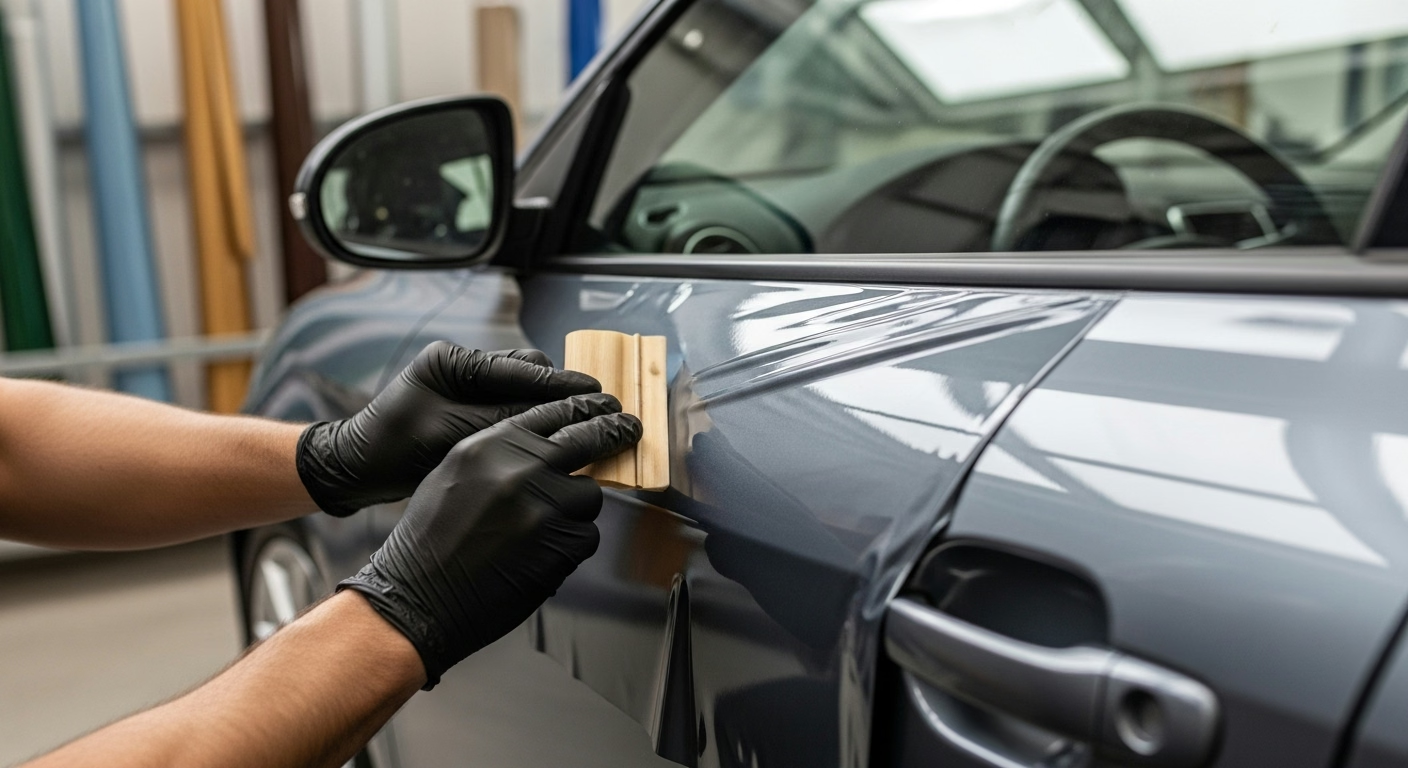
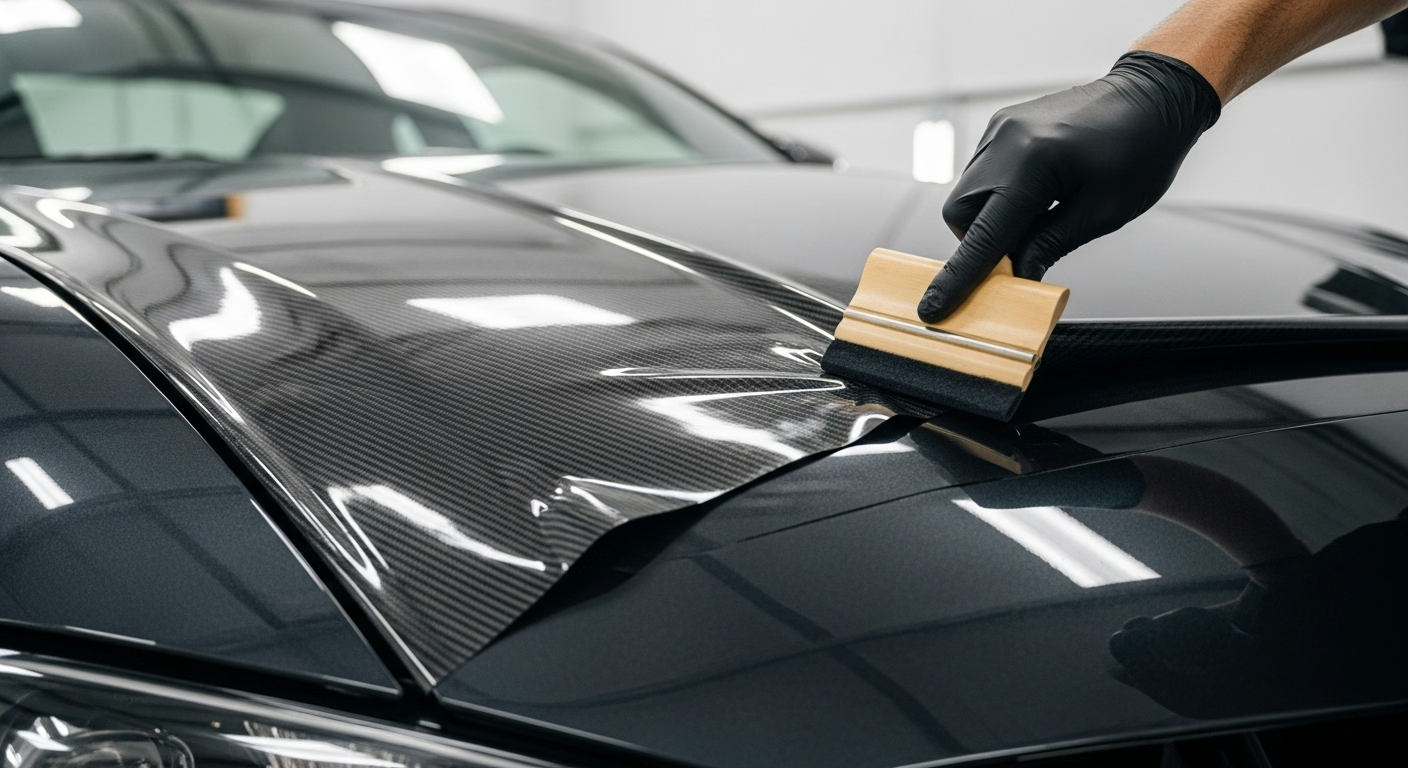
Installation quality determines whether a five-year film lasts five years. The vehicle arrives clean and dry; the fitter degreases every surface, removes or loosens trim where needed, and works in a dust-controlled bay at a stable temperature around 20 degrees Celsius. Film is positioned, squeegeed, heated into recesses and post-heated so it holds its stretched shape.
Time on the bay depends on format. A car or medium van in full custom print commonly takes one to two days; smaller partial jobs are done in hours, and the specifics of the most common commercial format are covered in the article on van vehicle wraps. Large trailers can run to three or four days.
Handover includes a joint inspection of edges, seams and alignment, plus aftercare guidance: hand washing rather than pressure jets close to edges, and a first check after a few weeks to confirm the film has settled. A written guarantee on film and fitting is standard practice among professional installers.
A custom livery changes the appearance of a registered vehicle, which triggers a short list of administrative points. None is complicated, but each one left unhandled can create friction at resale, at inspection or in a claim.
A single vehicle is a project; a fleet is a programme. The difference shows in three recurring scenarios observed in the market.
A six-van trades business typically wraps in one batch during a quiet week, with two vehicles in the bay at a time so the business never loses more than a third of its capacity. The same artwork adapts to each body type from the proof pack, and the whole fleet leaves with an identical livery.
A courier operation of forty vehicles phases the rollout over one or two months, aligned with maintenance downtime, so revenue vehicles are never idle for branding alone. Unit price drops because print setup and design are spread across the run.
A regional services company with a mixed and ageing fleet uses film to unify vehicles bought years apart. Data from the ACEA report on vehicles in use in Europe puts the average age of light commercial vehicles on European roads at more than ten years, and a shared custom livery makes a ten-year-old van and a new one read as the same brand. The broader planning questions for this kind of programme are treated in the article on commercial vehicle wraps.
The stages described in this article map directly onto the services listed on the Brands And Markets services page: design, print production, fitting and fleet coordination. For lettering-first projects, the vehicle lettering service covers the lighter end of the spectrum.
For a structured project, a pass through the online configurator turns a vehicle list into visuals and a framed specification in a few steps, which is the fastest way to move from intention to a comparable quote.
A custom vehicle wrap is a design and production workflow, not a product picked from a shelf. The projects that run smoothly share the same traits: a complete brief with real vehicle data and production-grade brand assets, consolidated feedback during design, sign-off on an in-situation proof, cast film for long-term use, and a rollout plan that respects the operating schedule of the fleet.
Handled this way, the result is a branded fleet that works as owned media for five years or more, with the administrative points, V5C, plates, insurance and VAT, settled from day one. The sensible next step for a business considering the move is to assemble the vehicle list and brand assets, then request comparable quotes on that identical specification.
A custom project adds a creative fee, commonly a few hundred pounds, on top of production and fitting. Partial custom graphics on a medium van typically sit between 800 and 1,500 pounds, a full printed livery on a panel van between 2,000 and 3,500 pounds fitted, and a large lorry or box body between 3,000 and 6,000 pounds. The figures scale with surface area, film grade and design complexity. Repeating the same artwork across several vehicles spreads the design and print setup cost, which is why the price per vehicle drops on fleet orders and why quotes should always be compared on an identical specification.
From a complete brief, a first design draft commonly arrives within one to two weeks. The revision and approval phase adds anything from a few days to several weeks, depending mainly on how many decision makers comment and whether feedback is consolidated. Once artwork is signed off, printing and lamination typically take about a week. Installation then runs from a few hours for partial graphics to one or two days for a car or medium van in full print, and up to three or four days for a large trailer. A realistic end-to-end estimate for a single vehicle is four to eight weeks.
Durability depends on the film family and the operating conditions. Printed cast film with a protective laminate, fitted by a trained installer, commonly lasts five to seven years in daily use. Calendered film on flat panels is usually rated for one to three years outdoors, which suits short campaigns rather than long-term liveries. High mileage, frequent pressure washing and permanent outdoor parking shorten those figures; covered overnight parking and hand washing extend them. A livery that must survive a full fleet cycle is therefore specified in cast film, with the laminate treated as non-negotiable.
On sound factory paint, professional vinyl film does not damage the finish. The film actually shields the bodywork from stone chips, light scratches and UV fading, and removal by a trained fitter with controlled heat leaves the original surface intact, which supports resale value. The exceptions are resprayed panels, filler repairs and corroded areas, where weaker paint layers can lift together with the adhesive during removal. A professional installer inspects the bodywork before quoting and flags those risk areas in writing, so the business knows exactly which panels carry a caveat before work begins.
Two separate declarations apply. The DVLA must be informed only when the dominant colour of the vehicle changes: a full colour-change livery is recorded on the V5C registration certificate, while partial graphics that keep the base colour require no update. The insurer, by contrast, should be told about any wrap, because it counts as a vehicle modification and an undeclared modification can complicate a claim. In every case, number plates stay fully legible, lights and reflectors keep their visibility, and window film respects the minimum transparency rules that apply to glazing.
Prêt à transformer votre projet ? Discutons de vos besoins et de la manière dont nous pouvons collaborer.
Adresse : 28 rue Fresnel – F-78310 COIGNIERES
Téléphone : 01 85 40 01 75